Written by: Maya Roxanne
There’s a certain magic in the underwater world that words can barely capture. The vibrant coral reefs, the dance of fish schools, and the graceful presence of sharks and turtles create an ecosystem so rich with life that it feels like another universe. This was the world I had the privilege of immersing myself in during my internship with Gili Shark Conservation. This experience profoundly shaped my perspective on marine conservation and sustainability.
Before stepping foot on the sandy shores of Gili Air, I already had a deep fascination with marine life. I started by taking my very first open-water diving certification back in 2018 in Bali, and ever since it has changed my whole perspective on the marine environment. Being in the underwater world brings a certain calmness and a meditative kind of feeling that makes me fall in love with it all over again every time.
Sharks are often portrayed as fearsome predators, but their role in the ocean’s ecosystem is far more complex and vital than most people realise. As apex predators, sharks help maintain the balance of marine life by regulating the populations of species lower down the food chain. This, in turn, supports the health of coral reefs, seagrass beds, and other critical marine habitats. In the face of rising threats like overfishing, habitat destruction, and climate change, sharks are more crucial than ever for ocean sustainability. In this article, I will bring you to dive into why sharks matter not just for the oceans, but for the entire planet’s health and future.

The Ecological Importance and Misconception of Sharks
Sharks are among the oldest and most fascinating creatures in our oceans, and their ecological role is unparalleled. As apex predators, sharks sit at the top of the marine food chain, regulating the populations of other species. This maintains a healthy and balanced ecosystem, ensuring that no one species becomes too dominant or overgrazes vital habitats like coral reefs. Without sharks, the balance would be disrupted, leading to overpopulation of certain species and depletion of others, which could have cascading effects on the entire food web.
In Gili Air, most sharks encountered are whitetip reef sharks (Triaenodon obesus) and blacktip reef sharks (Carcharhinus melanopterus), which are not considered apex predators. According to Roff et al. (2016), most reef-associated shark species, including these, function as mesopredators alongside a diverse group of reef fish. These sharks play a crucial ecological role by regulating populations of smaller prey species, contributing to the balance of coral reef ecosystems. However, one of the biggest misconceptions about sharks is that they’re dangerous, unpredictable killers that pose a threat to humans. This fear has led to widespread harm to shark populations, with many species being killed out of fear or misinformation, as highlighted by Shiffman (2022) in his book Why Sharks Matter: A Deep Dive with the World’s Most Misunderstood Predator. In reality, sharks are incredibly important for maintaining the health of marine ecosystems, and they rarely pose a danger to humans. In fact, sharks are far more at risk from human activities than the other way around. Like reef sharks, their position as mesopredators makes them vulnerable not only to larger predators like tiger sharks but also to anthropogenic threats, such as overfishing and habitat degradation, which could disrupt the intricate dynamics of reef environments.
The Greatest Threats to Shark’s Population
Sharks face some of the greatest threats to their survival, and the number one threat is unsustainable overfishing. Many species of sharks, especially those that are slow to reproduce and mature, are extremely vulnerable to overfishing. Shark populations cannot bounce back quickly because many species only produce a few offspring at a time, and they take years to reach maturity. This makes them especially susceptible to population declines from fishing pressures.
The demand for shark fins, often driven by the shark fin trade, is another significant factor in the decline of shark populations. As Bogdanic (2024) notes, shark fins are highly prized in some cultures, particularly in Asia, contributing to the over-exploitation of these animals. Indonesia, located in the centre of the Coral Triangle, is known as the world’s largest shark-fishing nation, with Tanjung Luar, West Nusa Tenggara, serving as the most popular shark market where hundreds of fishermen depend their livelihood on shark fishing (Bogdanic, 2024). Consequently, shark numbers are plummeting, and without intervention, many species could face extinction.

When shark populations decline, the effects ripple throughout the entire marine ecosystem. The absence of sharks can lead to an increase in the populations of smaller fish, which in turn depletes the numbers of herbivorous species that maintain the health of coral reefs and seagrass beds. In Gili Air, where only blacktip and whitetip reef sharks are present, a decline in these species could disrupt the delicate balance of the reef ecosystem. For instance, an increase in populations of smaller predatory fish, such as lionfish (Pterois volitans), could occur. These species may prey on juvenile herbivorous fish like parrotfish (Scaridae) and surgeonfish (Acanthuridae), which play a vital role in controlling algae growth on reefs and seagrass beds. Without these herbivores, algae could overgrow, smothering corals and seagrass, and ultimately harming the entire ecosystem’s health and biodiversity. This disruption, therefore, has long-term consequences, not only for marine biodiversity but also for the sustainability of fisheries on which many coastal communities depend.
A Call to Protect Our Oceans
Protecting sharks requires a commitment to sustainable fishing practices. By enforcing regulations that limit overfishing, protect vulnerable species, and promote sustainable seafood sourcing, we can help to ensure that shark populations are preserved for future generations. Sustainable fishing practices are essential for maintaining healthy oceans and ensuring marine life, including sharks, to thrive.
In conclusion, sharks are not just an iconic species; they are a keystone to ocean health and sustainability. By recognising their vital role in the ecosystem and addressing the threats they face, we can contribute to the protection of these incredible creatures and the future of our oceans.
Overal, my time with Gili Shark Conservation was more than just an internship—it was a transformative experience that reaffirmed my commitment to protecting our oceans. The underwater world is a delicate, awe-inspiring ecosystem that deserves our respect and care, and there are definitely countless ways each of us can contribute to its preservation.
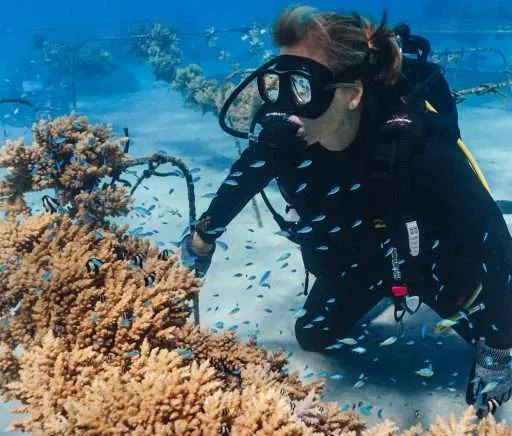
As someone studying sustainability, I see a clear connection between marine conservation and broader sustainability goals. Oceans regulate the Earth’s climate, provide food and livelihoods for millions, and are home to incredible apex predators like sharks and other vital biodiversity. Protecting them is essential for achieving a sustainable future.
If you’re inspired to dive into marine conservation, I encourage you to explore opportunities with Gili Shark Conservation—whether through volunteering, donating, or simply spreading awareness. Every effort counts. And, to the sharks that first sparked this journey—their strength, elegance, and vital role in the ocean’s balance. They’ve inspired me to keep fighting for a sustainable future, and I hope they inspire you too.
References:
Roff, G., Doropoulos, C., Rogers, A., Bozec, Y. M., Krueck, N. C., Aurellado, E., … & Mumby, P. J. (2016). The ecological role of sharks on coral reefs. Trends in ecology & evolution, 31(5), 395-407.
Shiffman, D. (2022). Why Sharks Matter: A Deep Dive with the World’s Most Misunderstood Predator. JHU Press.
Bogdanic, E. (2024). Shark fishing: The tradeoff between ecological sustainability and local livelihoods. Gili Shark Conservation. Retrieved from https://www.gilisharkconservation.com/shark-fishing-the-tradeoff-between-ecological-sustainability-and-local-livelihoods/
